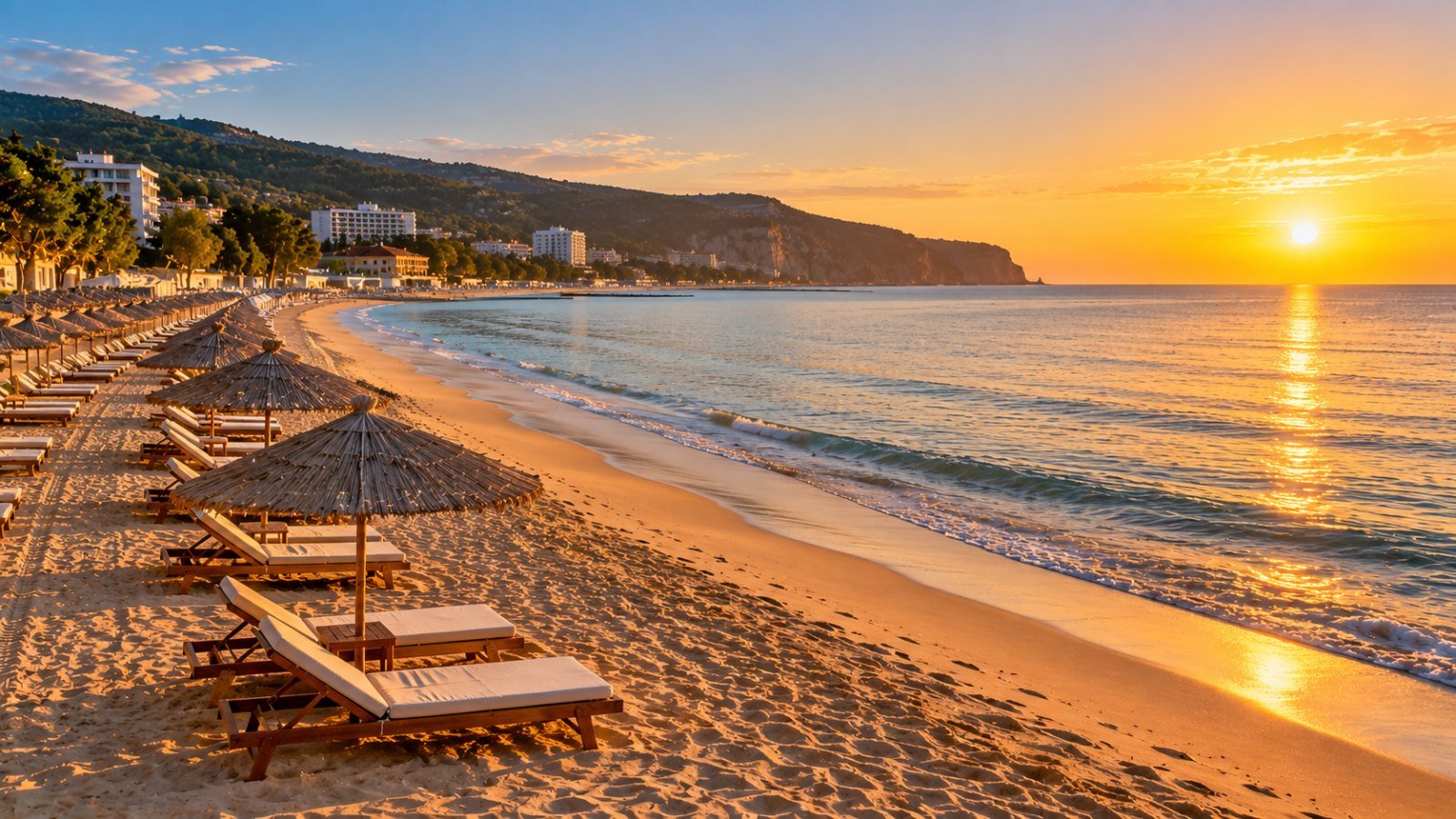
Guests decide on the sand, not at a desk
Most visits to a beach bar's site start on a phone, outdoors, in bright light, often while someone in the group is already walking along the shore. The questions are short: are you open today, is there a table or a sunbed free later, what is on tonight, where exactly are you. If the answers sit in a photo of a handwritten board or in a story that disappears after a day, the visitor moves on to the next pin on the map.
A website cannot make a beach busy. What it can do is make sure the person who is already deciding finds a clear answer in text, on the first screen, in the order they ask the questions.
The season is part of the product
A year-round café fixes its hours once and edits them rarely. A seasonal venue has a different rhythm: opening weekend, full season, a shorter autumn schedule, closure. The website should state the current phase in one line at the top, for example the opening date of next season or the last day of this one, and that line should be changed as soon as it is out of date. A site that still shows last summer's dates in November costs more trust than a site that says nothing.
The same logic applies to Google. According to Google's Business Profile help, special hours cover temporary changes or closures of up to six days in a row, while a business that is closed for the off-season is marked as temporarily closed. Set correctly, Google Maps shows the truth when someone searches in March. The profile side is explained in the Google Business Profile guide, the wider winter problem in the article on quiet months.
For the website itself, Google's structured data documentation says that opening hours can carry a start and an end date, so seasonal hours and seasonal closures can be described in a form search engines read. Google also states that it does not guarantee any feature will appear, so this is housekeeping, not a ranking trick.
Hours that depend on the weather
"Open from morning until the last guest" is not an opening time, and "if the weather is good" is not a schedule. Visitors still need something to plan around. A workable pattern is fixed hours for bar and kitchen as the default, plus one visible status line that the owner changes on the day: open as usual, closed today because of wind, open from 14:00. It is text on the page, not a picture, so a phone can read it aloud, a browser can translate it and a search engine can find it.
Keep exactly one place as the source of truth. If Instagram says one thing, Google another and the website a third, guests believe whichever they saw last and blame the venue when it is wrong. Update the website status first and copy it from there.
There is no street address on a beach
City venues never face this. A navigation app needs a point, and a beach has none. The website should give the name of the beach and the section, the access path or landmark that a person on foot recognises, a map pin placed on the venue itself rather than on the car park, and one line on where to park or which stop is closest. Two sentences in the right place prevent more lost guests than a long description of the atmosphere.
Menu, prices and what is included
The menu should be text on the page, not an image or a PDF photographed in poor light. If a sunbed or table arrangement involves a minimum spend or a fee, say so plainly and show when the information was last checked. Prices that cannot be kept current are better given as a range with a date than printed as if they were fixed. Allergen information belongs on the menu page; what the rules require there is a question for the venue's own adviser, not for a web designer.
Events: a calendar that cleans itself
Beach venues live on evenings with a DJ, a live set or a themed night. An event list is useful only while it is current. List upcoming dates as text with the start time, remove past events, and keep one evergreen paragraph describing a normal evening for someone who finds the page on a quiet Tuesday. A calendar full of past dates is worse than no calendar.
Table and sunbed enquiries
Start with an enquiry form: date, time, number of people, phone number and a free-text field. The reply comes from a person, and the page should only promise what the venue will actually do, for example "we answer on the same day in season". Because the form collects personal data it needs a privacy notice; the article on forms, maps and consent covers the same mechanics for a guesthouse. Taking payment online is a separate decision and can wait.
Guests from abroad
Guests on the Black Sea coast speak many languages. The minimum is an English version of the hours, location, menu and enquiry form, written for English readers rather than machine-translated page by page. Link the language versions to each other with hreflang so Google knows which version is meant for whom.
What I would build first
A site of up to five pages in Bulgarian and English starts at €490 net. Hosting starts at €24. For a beach venue that usually means a home page with the season line and today's status, a menu, an events page, a location page with the pin and directions, and an enquiry page. I need your season dates, usual hours, the menu text, a few photos of your own place and the answer to one question: do you want guests to walk in, book, or ask?
Sources: Google Business Profile Help: Mark your business as closed · Google Search Central: LocalBusiness structured data · web.dev: Web Vitals
Frequently asked questions
We already post everything on Instagram. Do we still need a website?
Posts and stories are good for mood, but they scroll away and cannot be searched well, so hours, pin and menu end up scattered. The website holds the facts in one place; social media points to it.
How do we show the off-season closure on Google?
According to Google's help, closures of up to six days use special hours, while longer closures, including the off-season, use the status "Temporarily closed". Switch it back when you reopen.
Can guests reserve sunbeds online?
Start with an enquiry form that you answer yourself. Live availability and online payment need systems that must be kept current, so that decision comes after the basics work.
How fast does the page need to load?
web.dev names a Largest Contentful Paint of 2.5 seconds or less as good, measured at the 75th percentile of page loads. A light page with compressed photos is the usual way to get there.
Tell me about your beach bar or club, your season and what you want visitors to do. I will tell you what the site needs and send a fixed price.
Not sure how your website performs today? The free website check tests the homepage, https, robots.txt, sitemap, error page and speed on mobile and desktop. You get the result by email.